
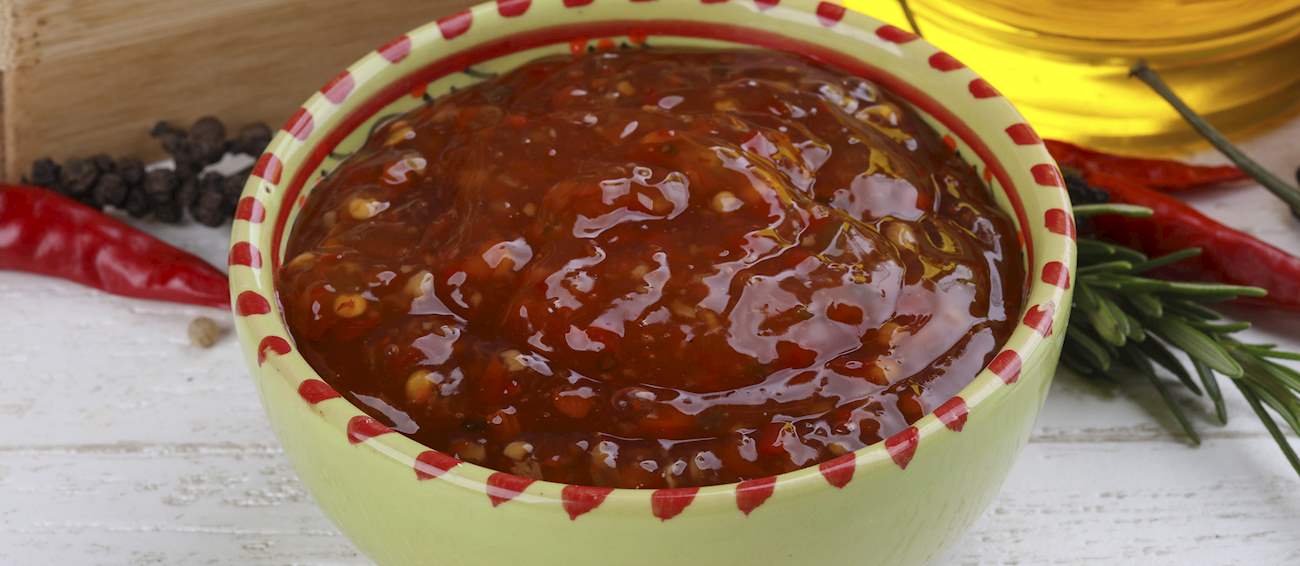
Sweet and sour sauce is usually associated with the authentic Chinese combination of rice vinegar and sugar. The probable origin of this sweet and sour mixture is the Chinese province of Hunan, where it was originally used as a condiment or a sauce for fish, meat, and vegetables.
Some theories claim that the Chinese province of Guangdong was the place where this traditional sauce first appeared, but it is also possible that both sauces were developed independently at the same time in different provinces. The primary form had a pale yellow color, it was usually uncooked and served on the side as a dipping sauce.
In some eastern Chinese provinces fruits such as pears and pineapples were used to create different flavor combinations. Later, the addition of various sauces, primarily soy and Worcestershire sauce, and different ingredients such as brown sugar, molasses, and honey, enabled the creation of numerous flavor varieties.
The western versions usually add ketchup, which contributes to the distinctive red color of the sauce. In China, sweet and sour sauce is mostly used for dipping and is usually incorporated in stir-fries. The sauce is highly versatile, and can act as an accompaniment to seafood, meat, and even vegetable dishes.
In the United States and Europe, it has become one of the most popular condiments and sauces, which has surpassed its original purposes, and is now commonly served in fast food chains and restaurants. This flavorful sauce is easily prepared at home, but can also be found in every better-equipped supermarket in China, Europe, and North America.