
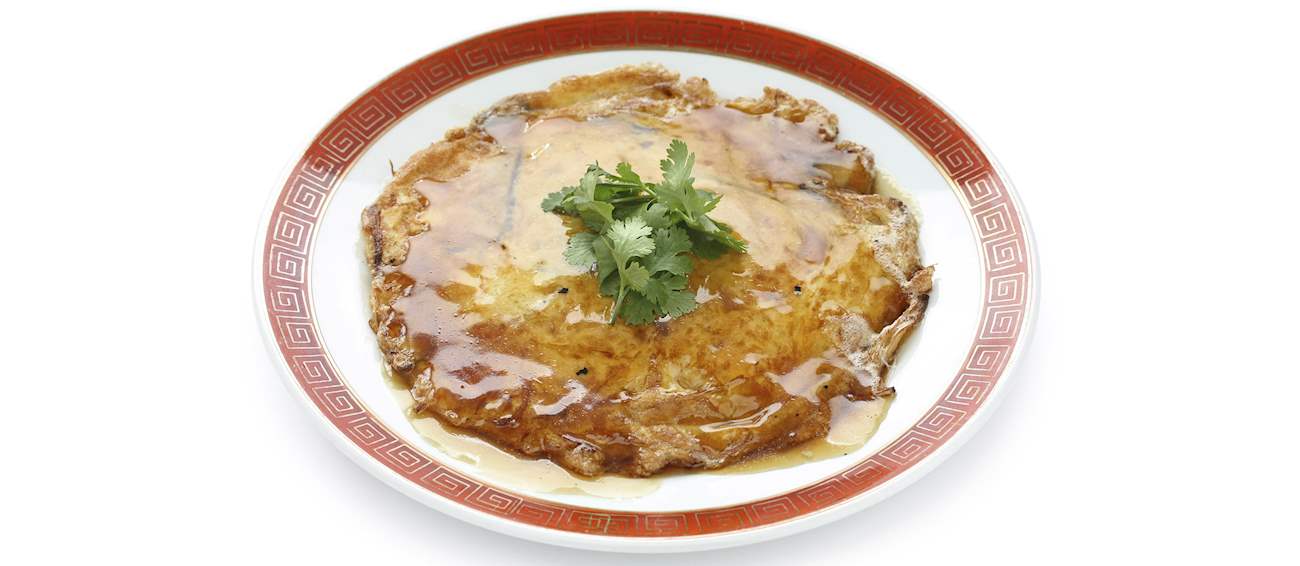
The inspiration for this omelet-like dish is believed to have come from fu yung egg slices, an elaborate recipe found in traditional Cantonese cuisine. Literally meaning lotus egg, this Chinese dish consists of lightly beaten eggs with either chopped ham, chicken, crispy-chewy bits of char siu pork, beef, shrimp, or even lobster, and an assortment of vegetables such as bean sprouts, bamboo shoots, sliced cabbage, carrots, spring onions, celery, mushrooms, and water chestnuts.
By the 1950s, egg foo young became standard Chinese takeout fare and it was prepared as a stuffed, deep-fried pancake. Today, egg foo young is normally pan-fried and served in a plethora of ways, the most typical of which is smothering this flavorful omelet in thick brown gravy.
In Chinese Indonesian cuisine, egg foo young is known as fu yung hai or pu yung hai; it is served with green peas in a sweet and sour sauce, and often accompanied with cap cai stir-fried vegetables and rice.